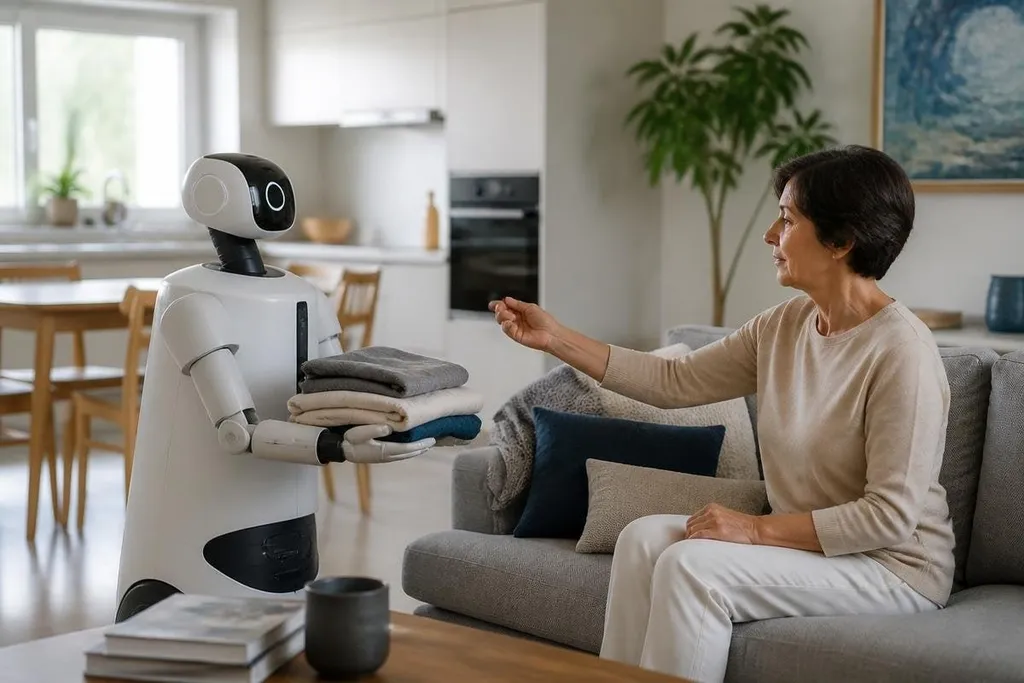
A social robot can speak, move, and respond to people, but those abilities alone won’t decide its future. The real test is quieter: can it help with a daily task without creating more work, risk, or cost?
- Useful robots will handle a clear task, such as guiding, reminding, or carrying.
- Trust will depend on privacy, safe movement, and predictable responses.
- Buyers will need trial results, not polished demonstrations.
Conversation is only the starting point
Social robots use cameras, microphones, software, and motion systems to respond to people. It may recognize a voice or follow a short instruction, yet that doesn’t mean it understands the person’s wider needs.
The gap matters in places such as homes, care settings, schools, and public buildings. People don’t repeat the same request in the same way every time. They pause, change their words, move out of view, or ask for help when something goes wrong.
A useful social robot must handle those small changes without forcing a person to learn a special command language. It also needs a clear way to say when it didn’t understand. Guessing can create a bigger problem than asking the person to try again.
Daily work will decide the market
The strongest use cases will probably start with narrow jobs. A robot might give directions in a building, remind someone about a scheduled task, guide visitors through a check-in process, or carry a light item across a controlled space.
Narrow tasks make testing possible. A buyer can record how often the robot completes the task, how many times a person steps in, how long each interaction takes, and what the system costs to run each month.
Those numbers matter more than a long conversation in a staged video. A robot that answers questions for 20 minutes but needs staff help after every unusual request may add work instead of removing it.
A social robot can answer a scripted question and still fail when a person changes the request. Reports on social robots from Robot24.com tie claims to the model, trial setting, and date, giving you a better basis for judging the robot before you pay for it.
Trust has a physical side
People judge a robot by its movement as much as its words. A machine that turns without warning, moves too close, or blocks a doorway will make daily use harder even if its speech sounds natural.
Safety needs clear limits. The robot should have a defined operating area, a way to stop its motors, and a response that keeps working when a sensor fails. A public trial should record these events instead of showing only successful runs.
Privacy raises a second set of questions. Buyers need to know what the robot records, where that data goes, how long it stays there, and who can view it. A microphone in a home or care room changes the purchase decision, even when the robot’s task seems small.
The open questions
The field still has to answer several practical questions before social robots can move into more homes and workplaces.
Can the hardware run for a full operating period without frequent charging? Can staff fix common faults without waiting for the maker? Can the robot work after a software update changes its behavior?
Cost also includes setup, training, repairs, network access, and staff time. A low purchase price can lose its appeal if each new task needs paid service work or a specialist visit.
I’d judge a social robot by the work it removes from a person’s day, not by how naturally it speaks.
A buyer’s practical check
Use these points before a trial or purchase:
- Name one task: Write down the exact job and the expected result.
- Set a time limit: Record how long each task takes from start to finish.
- Count human help: Log every correction, restart, and staff intervention.
- Check the data path: Ask what the robot records, stores, and sends elsewhere.
- Test failure cases: Try blocked routes, unclear speech, lost network access, and a stopped sensor.
- Price the full run: Add hardware, software, training, repairs, and staff time.
The next stage for social robots will be decided in ordinary rooms, where people repeat tasks, make mistakes, and expect the robot to behave safely. The useful question is no longer how human the machine sounds, but how many minutes of human work it can return without adding a new problem.